 Play: Teaching Kids Tech-Fu: Defence Against the Digital Dark Arts
Ideas, essays, and talks with practical use.
Here he stores his written thought: essays, talks, fragments of analysis, and explanatory documents for people who insist on understanding why things work. He could have stopped at making the systems. Regrettably, he also explains them.
In 460BCE, Plato argued that the written word would make us all dumber.
"calling things to remembrance no longer from within themselves, but by means of external marks."
Luckily, we know this because someone wrote it down.
Talks reel Surveillance footage
Play: Teaching Kids Tech-Fu: Defence Against the Digital Dark Arts
 Play: Crafting Creators from Consumers: 21st Century Education
Crafting Creators from Consumers: 21st Century Education
 Play: AI in Education: How Schools, Teachers and Students Can Thrive in an AI-Assisted Future
AI in Education: How Schools, Teachers & Students Can Thrive in an AI-Assisted Future
 Play: Hacker is Not a Dirty Word
Hacker is Not a Dirty Word
 Play: Learning machine learning – LIVE
Learning machine learning – LIVE
 Play: Prompt a Large Language Model – Part 1
Prompt a Large Language Model – Part 1
If a video won’t play here, open the full playlist on YouTube.
Latest Words
Collaborating with LLMs: Level Up from Centaur to Cyborg
Many people still treat LLMs as threats or shortcuts. This article distinguishes centaur tasks, where people and models divide the work, from cyborg tasks, where the model becomes part of an iterative thinking process. It includes practical personas, Critical Thinking Mode and Interview Mode prompts, plus a grounded case for experimentation, responsible use and human judgement.
Scar Tissue: The Editorial Residue LLMs Leave Behind
Why do finished AI-assisted projects keep answering questions their readers never asked? Scar Tissue examines the obsolete corrections, orphaned disclaimers and invisible arguments that survive long editing conversations with LLMs. Drawing on examples from coding-project authoring, it offers a practical way to find and remove that editorial residue while preserving useful rationale. Includes reusable prompts for audits, clean reconstruction and independent verification, with a simple aim: give readers the current truth without making them sit through the entire editorial saga.
Research Paper
From Blank Page to Brilliance: The OCEAN Approach to LLM Prompting, presents a practical, step-by-step framework that helps educators and professionals use large language models with clarity and confidence. By structuring prompts into five purposeful stages—Objective, Context, Examples, Assess, and Negotiate—it turns what can feel like a messy, unpredictable exchange into a repeatable, ethical, and human-centred process. Grounded in research and real-world use, OCEAN improves output quality while strengthening accountability, transparency, and critical oversight - positioning AI as a collaborator that extends human capability, not replaces it.
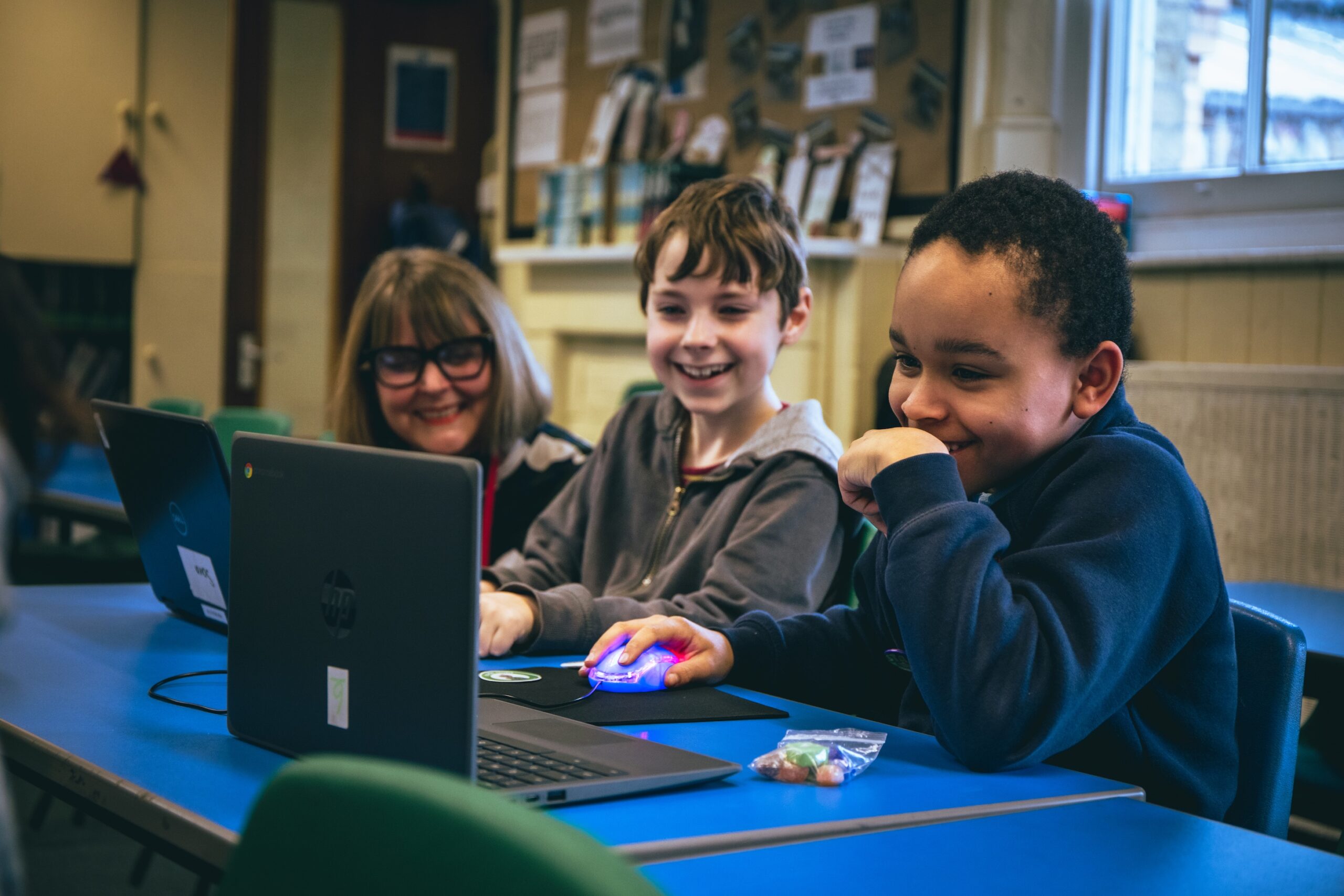
Ready, set, Scratch: A beginner's guide to creative coding
A welcoming, practical introduction to Scratch for absolute beginners, this article breaks down how to start creating with code and emphasises experimentation over perfection, ideal for anyone curious about creative coding or teaching it to others.

OCEAN Prompting Process
The OCEAN Prompting process is a structured guide to effectively using Large Language Models (LLMs) for co-authoring content. The acronym stands for Objective (defining your goal), Context (providing necessary background, tone, and specific details), Examples (offering one-shot, few-shot, or many-shot examples to guide the output), Assess (checking the output for accuracy, bias, and adherence to goals), and Negotiate (conversational refinement of the results). The process emphasizes the user's responsibility to ensure the final output's quality, accuracy, and alignment with organizational principles, culminating in a mandatory Final Step: Human Edit before submission.
See pages 32-33 in Hello World 25.
Try the CodeClub project version suitable for young and old people: rpf.io/llmprompt.

The Raspberry Pi Build HAT and LEGO components at our CoderDojo
A fun and inspiring account of using the Raspberry Pi Build HAT together with LEGO at a CoderDojo, showing how tangible building and coding can be combined to spark curiosity and deepen learner engagement. This was a fun project to work on.
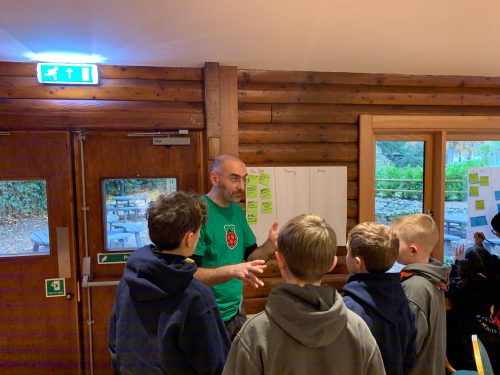
Social Action Hackathon with the Scouts
This article captures a hackathon where young Scouts used tech to tackle real social challenges, highlighting how computing skills can connect with community issues and empower meaningful creative problem-solving. It also shows how roleplay, teamwork, and rapid prototyping can turn technical learning into purposeful action, with young people designing practical ideas for real-world impact.
Project-based learning: a path to agency
Project-based learning: a path to agency makes the case that the most powerful learning happens when the project is the unit. By asking students to design solutions to real problems, learning emerges through investigation, iteration, and making, rather than assessment-first activities. The piece shows how agency increases engagement, builds transferable skills, and reframes the teacher's role from delivering answers to enabling discovery, with practical examples drawn from hackathons and classroom-ready resources.